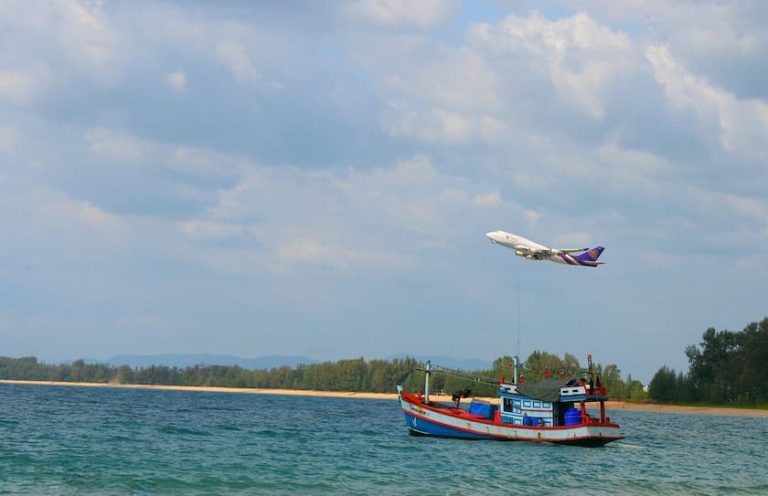
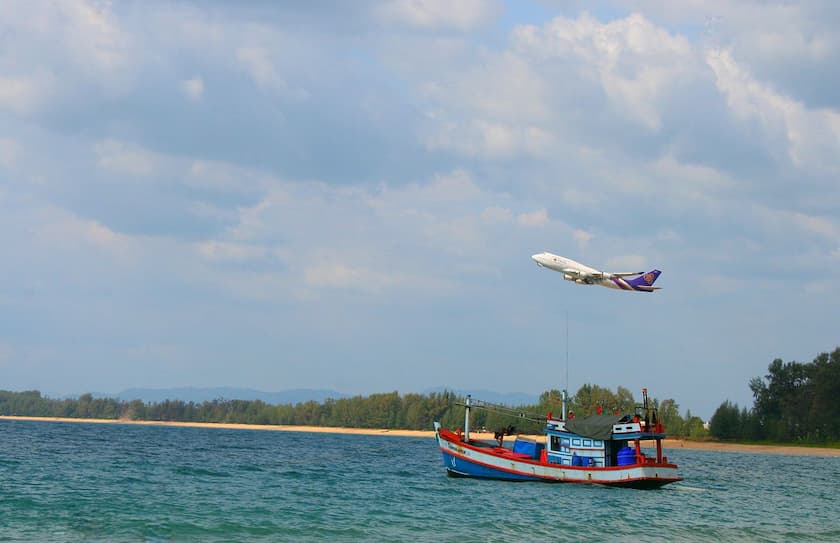
Phuket International Airport is the main arrival point for Phuket and the wider Andaman coast. For many travellers, it is also the first impression of southern Thailand. With passenger numbers continuing to rise, a little preparation before landing makes the experience far easier, from clearing immigration to reaching your final destination in Phuket or Phang Nga.
Phuket International Airport
Phuket International Airport, commonly known as HKT, is located at the northern tip of the island beside Mai Khao Beach. Phuket Town is usually around 50 minutes away by car, while destinations in Phang Nga province, including Natai Beach, are closer at approximately 25 minutes in light traffic.
The airport is one of the busiest in Thailand and often feels active, particularly in the afternoon and early evening. Walking distances inside the terminals are longer than many first-time visitors expect, so allowing extra time to move between immigration, baggage claim, and transport areas helps reduce fatigue after long flights.
Airport Terminals
The airport operates three passenger terminals. The International Terminal handles overseas flights. The Domestic Terminal serves routes within Thailand. A smaller charter terminal supports selected seasonal and private services.
Signage is clear and available in English, though passengers should expect a steady flow during peak times. Travellers with tight onward connections or pre-booked transfers should factor in both queue times and walking distance when estimating arrival timing.
Entry Requirements and Arrival
-
Thailand Digital Arrival Card
All non-Thai nationals must complete the Thailand Digital Arrival Card before travel. This online form replaces the traditional paper card. Keeping a digital copy or screenshot on your phone is recommended, as the mobile signal inside the terminal can be busy immediately after landing.
-
Immigration and Passport Control
Immigration queues vary by time of day and season. Automated passport control gates are being gradually introduced and can expedite the process for eligible travellers during quieter periods. Having your passport, boarding pass, and arrival details ready before reaching the counter makes the process smoother.
-
Baggage and Customs
Baggage reclaim follows immigration and is well signposted. Information counters assist with delayed luggage or general enquiries. Customs checks are usually straightforward.
Smoking is only permitted in designated outdoor areas, which are limited and not directly outside arrivals. Vaping devices are illegal in Thailand and may be confiscated at the airport. Drones also require local registration before use, even if they arrive without issue.
Money, SIM Cards and Essentials
-
Cash and Currency Exchange
ATMs and currency exchange counters are available throughout the arrivals area. Airport rates are generally lower than those in town, so many travellers withdraw or exchange a small amount for transport and initial expenses, then exchange more later.
-
Mobile Data and Connectivity
Local SIM cards are sold at arrivals with short-term tourist plans. Buying one upon arrival is simple, but setting up an eSIM before departure allows instant connectivity upon arrival. Free Wi-Fi is available, but speeds may slow during busy periods.
Bottled water is readily available once landside, though there are no refill points immediately after immigration.
-
Food, Coffee and Supplies
Both terminals offer cafés, casual dining, and convenience stores. Choice is broad during daytime hours. After around 10 pm, options become limited, which is worth noting for late arrivals.
-
Lounges and Fast Track Services
Several Coral lounges operate across the international and domestic terminals, offering seating, refreshments, and Wi Fi. Some also include showers and short massage services, subject to availability. Paid fast-track services are available, though access and inclusions may vary and should be checked close to travel.
-
Airport Charges and Ticket Pricing
International departure tickets include a Passenger Service Charge that supports airport infrastructure upgrades. This fee is already included in the ticket price and does not require payment at the airport.
Transport from Phuket International Airport
-
Ride Hailing Services
App-based services such as Grab and Bolt are widely used and provide transparent pricing. Pick-up points are signposted but are not directly outside the arrivals doors. First-time visitors sometimes miss this, so following the signs carefully avoids confusion.
-
Taxis and Private Cars
Official taxis operate from outside the terminals. Agreeing on the fare in advance or confirming meter use is advised. Private cars offer a more comfortable option, particularly for families, late-night arrivals, or those travelling north into Phang Nga.
-
Buses and Budget Travel
The Phuket Smart Bus runs along the west coast towards Rawai and is a cost-effective option, though journeys are longer and involve walking to and from stops. An airport bus also links directly to Phuket Town for onward connections.
-
Car Hire
Car hire desks are located in the arrivals area. An international driving permit is required. Driving offers flexibility but may feel demanding after long-haul travel or during peak traffic periods.
Transfer To Aleenta Phuket Resort
For guests travelling directly to Aleenta Phuket Resort and Spa, a pre-arranged transfer offers the most relaxed arrival. Drivers meet guests after baggage claim, assist with luggage, and provide a direct journey north to Natai Beach.
The drive usually takes around 25 minutes, shifting quickly from the airport environment to the open coastline. This option is particularly well-suited to late arrivals or those who prefer a smooth first evening without navigating transportation options.
Road Conditions
Road upgrades across Phuket aim to improve future traffic flow, though construction can slow journeys at peak hours. Morning and early evening are the busiest times. Building extra buffer time into airport transfers is recommended, especially for international departures.
Accessibility
The airport offers step-free access, lifts, and passenger assistance services. Families travelling with buggies or passengers needing support should request assistance through their airline in advance, particularly during busy travel periods.
Airport FAQs
Q: Do I need cash on arrival?
A small amount is useful, though cards and ride-hailing apps are widely accepted.
Q: Is the Thailand Digital Arrival Card required?
Yes, it must be completed online before arrival for non-Thai nationals.
Q: What is the easiest transfer to Phang Nga?
A pre-booked private car offers the most direct and comfortable route.
Q: Are queues always long?
They depend on timing. Early morning and late evening are often quieter.
A Smooth Arrival Sets The Tone
Phuket International Airport is busy, efficient, and well organised once you know what to expect. With documents completed in advance, transport arranged, and a clear sense of the arrival flow, the airport becomes a simple gateway rather than a hurdle. From there, the short journey to Hidden Gems in Phang Nga marks a clear shift from transit to time well spent by the sea.
Related Articles
- Planning Your Phang Nga Holiday
- The Future of Luxury at our Phang Nga Resort in 2025
- National Parks In Phang Nga Province
- When is the Best Time to Visit Phang Nga
- Thailand Digital Arrival Card (TDAC) for Your Thai Adventure
Prefer an AI Summary?
Aleenta Phuket
Phang Nga Resort & Spa
Phang Nga Resort & Spa
33 Moo 5, Khok Kloi,
Takua Thung, Phang Nga
82140 Thailand
T: +66 (0) 76 580 333