Chinese New Year is one of the most atmospheric times to experience Bangkok. As the lunar calendar turns, the city adopts a different pace and texture. Streets glow red, incense drifts through neighbourhoods, and long-established traditions move into public view. What unfolds is not a single event, but a series of experiences spread across specific areas of the city.
For visitors, understanding where things happen and what each location offers is key to enjoying the festival fully.
Bangkok in Celebration
Chinese New Year reflects the profound influence of Bangkok’s Chinese community, which has shaped the city’s commerce, food culture, and neighbourhoods for generations. In the days leading up to the New Year, families prepare offerings, clean their homes, and decorate storefronts with symbols of prosperity and renewal.
Unlike some cities, Bangkok does not contain the Chinese New Year within closed venues. The festival unfolds across working streets, temples, and residential areas, making it both immersive and accessible.
When the City Turns Red
Chinese New Year follows the lunar calendar and usually falls between late January and mid-February.
- New Year’s Eve is focused on family rituals and preparation. Public activity is limited.
- New Year’s Day centres on temple visits, prayer, and daytime observance.
- Days two and three bring the most public activity, especially in the evenings.
Most official street celebrations begin in the late afternoon and continue well into the night.
Where the Action Is
Yaowarat Road and Odeon Circle
Location:
Yaowarat Road, western end near Odeon Circle.
This is the primary and most reliable official celebration area. Each year, city authorities and tourism organisations designate this stretch of Chinatown as the main event zone.
What happens here:
- Official opening ceremonies
- Main performance stage with scheduled cultural shows
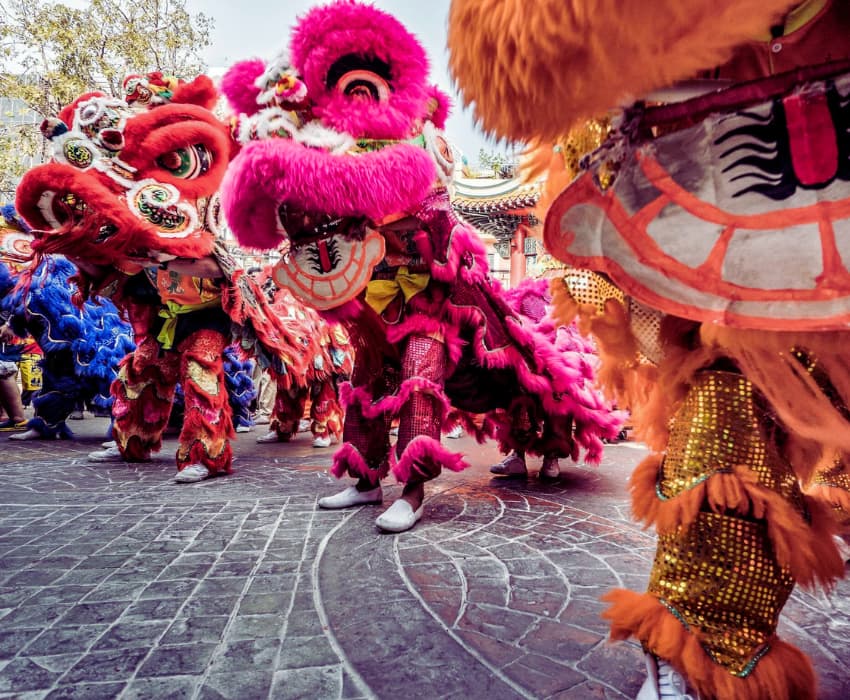
- Dragon and lion dance routes
- Lantern displays and festival lighting
- Evening pedestrian-only access in some sections
Best time to visit:
Late afternoon for atmosphere without congestion, or early evening for full performances.
Who it suits:
First-time visitors, those wanting organised events, and travellers with limited time.
Chinatown Side Streets and Surrounding Areas
Location:
Streets branching off Yaowarat Road, including Soi Texas and Song Wat Road
These streets offer a more local, fluid experience.
What happens here:
- Unscheduled lion dance visits to shops and restaurants
- Family-run food stalls and seated restaurants
- Local shrines and small temples
- Less crowd density than the main road
Best time to visit:
Early evening or later at night, once the main road crowds peak.
Who it suits:
Repeat visitors, food-focused travellers, and those seeking atmosphere without density.
Temples for Chinese New Year
Wat Mangkon Kamalawat
Location:
Wat Mangkon Kamalawat
Wat Mangkon Kamalawat is the most important Chinese Buddhist temple in Bangkok and the spiritual focal point of the Chinese New Year.
What happens here:
- Morning and midday prayer rituals
- Incense offerings and merit-making
- Blessings for health, fortune, and stability
Best time to visit:
Early morning to mid-afternoon, particularly on New Year’s Day.
Visitor notes:
Dress modestly and move quietly. Follow the flow of worshippers and avoid blocking access during rituals.
What You Will See on the Streets
Chinese New Year street activity does not follow strict schedules. Instead, it unfolds in waves.
- Dragon and lion dances move along predetermined routes but stop unpredictably to bless businesses
- Pop-up performance stages host traditional music and dance
- Firecrackers and percussion punctuate the evening, especially near temples and intersections
The most memorable moments often happen between official performances, when the street becomes the stage.
Eating for Luck
What to Eat
During Chinese New Year, many foods are chosen for their symbolic meaning.
- Whole fish for abundance
- Long noodles for longevity
- Dumplings and buns for prosperity
- Sticky rice cakes for unity and progress
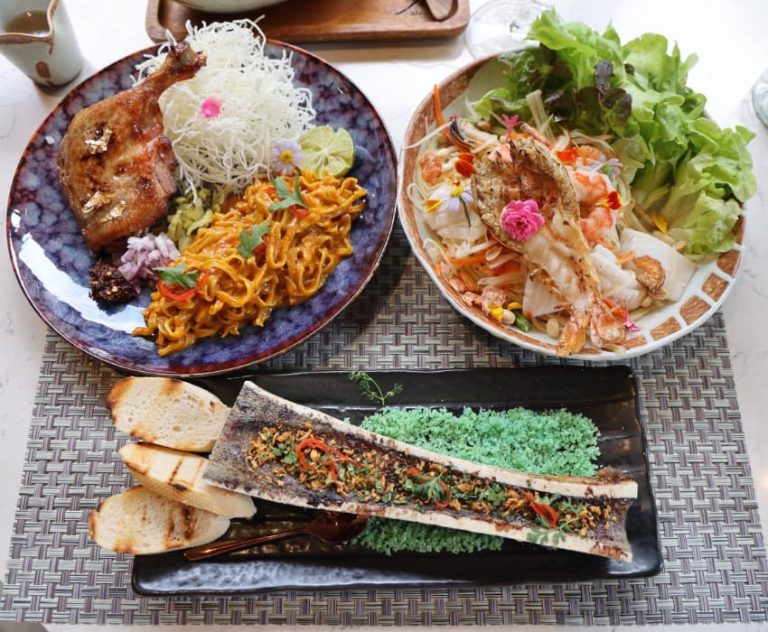
Roast duck, crispy pork, seafood, and seasonal sweets dominate menus across Chinatown.
Where to Eat
Yaowarat Road:
Best for grazing, quick bites, and variety. Expect queues and limited seating.
Side Streets:
Family-run restaurants offer seated meals and seasonal menus. These areas are easier to navigate and ideal for longer meals.
When to Eat
- 5pm to 7pm: Easier movement, shorter queues
- 7pm to 10pm: Peak atmosphere and peak congestion
- After 10pm: Still lively, with more space and flexibility
Standing, sharing tables, and ordering multiple dishes is part of the experience.
Tips for Visitors
- Use MRT rather than taxis to reach Chinatown
- Wear comfortable footwear and light clothing
- Expect slow movement and plan to wander rather than rush
- Observe temple etiquette and personal space
- Be patient and flexible, as schedules change nightly
Chinese New Year, the akyra Way
Chinese New Year reveals Bangkok at its most expressive. The city is louder, brighter, and more communal, yet still anchored in tradition. Experiencing it well is about balance. Knowing where to immerse yourself, and when to step back, allows the festival to feel energising rather than overwhelming.
Staying at akyra Bangkok 11 Hotel places you in a calm, central neighbourhood with easy access to the city’s primary celebration areas. From Sukhumvit, Chinatown and Yaowarat Road are within easy reach by MRT, making it easy to join the evening festivities and then return to a quieter part of the city once the streets reach their peak.
This rhythm defines the akyra approach. Step into the intensity of lantern-lit streets, temple courtyards, and late-night dining. Then retreat to a neighbourhood where mornings move more slowly, giving space to reflect, recharge, and explore Bangkok beyond the festival zones.
Chinese New Year in Bangkok is not something to watch from the sidelines. By moving between the city’s official celebration areas and its everyday neighbourhoods, you experience the festival as it is meant to be lived, as part of the city itself.
Related Articles
- Trendy Neighbourhoods In Bangkok
- Bangkok Street Food Tour around Sukhumvit
- EM District In Bangkok
- Top 10 Popular Streets in Bangkok
- Four Day Bangkok Itinerary
Prefer an AI Summary?
The akyra Bangkok 11
65 Soi Sukhumvit 11,
Khlong Toei Nuea, Watthana,
Bangkok 10110, Thailand
T: +66 2 853 9225