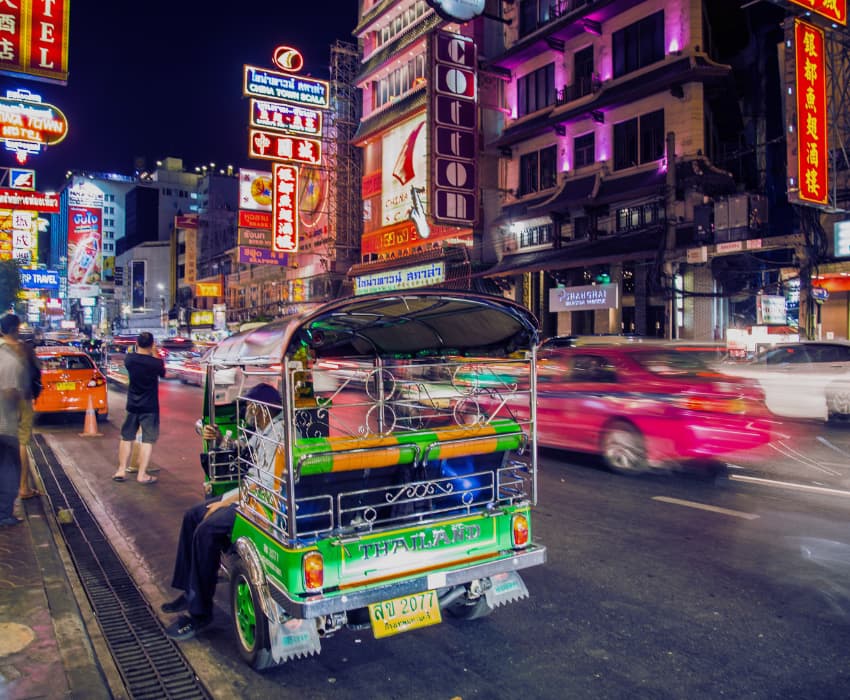
Bangkok is often described as fast, loud, and overwhelming. Those descriptions are not inaccurate, but they are incomplete. The city is not experienced all at once. It reveals itself gradually, neighbourhood by neighbourhood, through daily routines rather than grand statements. Trendy in Bangkok rarely means newly built or aggressively curated. It means places that feel current because people actively use, shape, and return to them.
Understanding Bangkok through its neighbourhoods changes how the city feels. Morning routines unfold slowly in residential streets, afternoons invite exploration in creative districts, and evenings stretch into long, layered nights where food, conversation, and music overlap. These shifts are not incidental. They define how Bangkok works.
For guests staying at akyra Bangkok 11 Hotel, exploring the city through its neighbourhoods offers something more meaningful than a checklist of attractions. From riverside communities shaped by generations of trade to café-driven districts and international nightlife hubs, these areas show how Bangkok lives now, not how it presents itself.
Talat Noi and Songwat Road
Talat Noi is one of Bangkok’s oldest riverside neighbourhoods, home to Chinese-Thai families whose lives revolved around river trade, metalwork, and repair. For decades, it existed quietly outside the city’s mainstream narrative. It was not ignored so much as overlooked. Workshops filled shophouses, spare engine parts defined the streetscape, and daily life followed a rhythm that resisted change simply by continuing.
The neighbourhood’s revival did not arrive with a master plan or a single defining moment. It emerged through attention. Photographers were drawn to Talat Noi’s surfaces first. Rusted machinery, peeling paint, and layered textures created a visual language that felt authentic rather than styled. Artists followed, then small cafés, galleries, and studios adapted existing spaces rather than replacing them. What distinguishes Talat Noi from many revitalised districts is that nothing fundamental was displaced. The neighbourhood absorbed interest without surrendering its function.
-
Morning
Morning in Talat Noi belongs to residents. Metal shutters rise slowly as mechanics return to work with tools worn smooth by use. Elderly neighbours sweep pavements and exchange greetings shaped by familiarity rather than courtesy. Small shrines glow softly with incense embedded in doorways. The air carries the faint scent of oil, river water, and coffee.
Cafés open without advance notice, attracting photographers and creatives who arrive early to experience the neighbourhood before the heat and foot traffic arrive. At this hour, Talat Noi feels unguarded, as though it has not yet realised it is being observed.
-
Afternoon
By afternoon, wandering becomes instinctive. Narrow alleys reveal murals painted directly onto peeling walls. Former warehouses quietly house galleries and design studios that operate on their own schedules. Songwat Road introduces light and openness, offering river views that recall Talat Noi’s past as a working port rather than a destination.
There is no obvious route to follow. Exploration here is unstructured. Discovery comes through patience rather than planning.
-
Evening and After Dark
Evenings remain intentionally subdued. Talat Noi does not attempt to reinvent itself as a nightlife district. Small cafés and bars glow gently, offering spaces for conversation rather than spectacle. Streets empty early, preserving a sense of neighbourhood life that feels increasingly rare in central Bangkok.
Talat Noi remains defined by what it still does. Workshops continue to operate. Families still live above their shops. Creativity exists alongside daily labour, not in place of it.
Banthat Thong
Banthat Thong has always been a food street. Long before it gained wider attention, it served students from nearby Chulalongkorn University, office workers finishing late shifts, and families seeking dependable comfort food. Its rise was not driven by novelty or reinvention. It was built on consistency.
As social media amplified its reputation, queues lengthened, and visitors arrived from across the city. Yet Banthat Thong resisted becoming a performance. Cooking remained the focus. Feeding people remained the purpose.
-
Morning
In the morning, Banthat Thong feels almost anonymous. A handful of cafés and noodle shops open early, serving regulars who live or work nearby. Delivery trucks pass through. The street rests between shifts.
-
Afternoon
By mid-afternoon, preparation takes over. Ingredients arrive in crates. Vendors chop, marinate, and simmer broths that will anchor the evening rush. The street hums quietly with anticipation rather than noise.
-
Evening and After Dark
After sunset, Banthat Thong transforms. Smoke rises from grills, queues form quickly, and the sound of cooking fills the air. People eat wherever space allows, standing, sitting, or moving between stalls. Meals stretch into conversations, and conversations stretch late into the night. Many vendors operate well past midnight, turning dinner into a shared ritual.
What keeps Banthat Thong grounded is its refusal to prioritise image over substance. Menus remain focused. Prices remain accessible. The street feeds its popularity without being consumed by it.
Ari
Ari represents Bangkok at its most balanced. Once a quiet residential district, it evolved slowly as cafés, bakeries, and creative businesses moved in without overwhelming the neighbourhood. Growth here was shaped by locals rather than developers, allowing Ari to expand without losing its sense of belonging.
This is not a place defined by spectacle. It is characterised by routine.
-
Morning
Mornings in Ari unfold deliberately. Locals walk dogs beneath tree-lined streets. Cyclists pass through shaded sois. Cafés fill with freelancers opening laptops, greeting staff by name, and settling into familiar corners. The pace is calm, but purposeful.
-
Afternoon
Afternoons invite lingering. Boutique shops, bakeries, and studios are scattered among homes, encouraging exploration without urgency. Ari reveals itself gradually, rewarding those who return rather than rush through.
-
Evening and After Dark
Evenings centre on neighbourhood dining rather than nightlife. Restaurants fill with regulars. Conversations extend naturally. Nights end early, reinforcing the district’s sense of calm.
Ari remains grounded because residential life continues to lead the way. Homes outnumber venues. Neighbours still greet one another. Creativity exists alongside domestic life, not above it.
Sukhumvit Soi 11
Sukhumvit Soi 11 is Bangkok nightlife distilled into a single street. International, unpredictable, and constantly evolving, it reflects the city’s global character while retaining its raw energy. Trends arrive quickly here, but movement and momentum remain constant.
-
Morning
-
Afternoon
-
Evening and After Dark
-
Morning
-
Afternoon
-
Evening and After Dark
-
Morning
-
Afternoon
-
Evening and After Dark
- Hidden Gems in Bangkok
- Four Day Bangkok Itinerary
- Top 10 Popular Streets in Bangkok
- EM District In Bangkok
- Neighbourhoods Along The BTS Sukhumvit Line
Mornings arrive late. Cafés cater to travellers and night owls easing into the day. The street feels subdued, almost reflective, as though recovering from the night before.
By afternoon, preparation replaces activity. Deliveries arrive – staff reset spaces. Anticipation builds quietly.
After sunset, Soi 11 shifts decisively. Rooftop bars glow against the skyline. Music spills into the street. Energy builds steadily and peaks late. Upper floors and unmarked entrances often lead to the most memorable venues.
Soi 11 functions as a crossroads rather than a destination. People pass through at different stages of the night, drawn by variety and spontaneity rather than loyalty to one place.
Thonglor and Ekkamai
Thonglor and Ekkamai represent aspirational Bangkok. Their rise mirrors the city’s expanding middle class and international outlook, shaped by lifestyle rather than landmarks. Dining, design, and consistency define these neighbouring districts.
Brunch culture defines mornings. Cafés fill with professionals, creatives, and families easing into the day. The mood is relaxed but polished.
Afternoons are functional. Meetings, shopping, and long lunches unfold within familiar circuits.
Evenings shift towards refinement. Cocktail bars, wine lounges, and curated dining experiences take centre stage. Thonglor and Ekkamai prioritise quality over novelty, evolving steadily rather than dramatically.
Charoen Nakhon
Charoen Nakhon’s resurgence followed improved transport links and renewed interest in the west bank of Bangkok. Once overlooked, it now balances heritage with contemporary development along the river.
Mornings unfold quietly. River breezes move through open walkways as locals begin their day. The pace is shaped by light and water rather than traffic.
Afternoons draw visitors across the river. Art spaces, cafés, and shopping invite slow exploration, often punctuated by ferry crossings that reinforce the sense of distance from central Bangkok.
As evening arrives, the river becomes a reflective stage. City lights shimmer across the water, creating a calm, expansive atmosphere. Dining and walking replace urgency.
Despite development, Charoen Nakhon remains anchored by the river. Historic structures and daily river life continue to define the district’s identity.
Neighbourhoods at a Glance
| Neighbourhood | Best For | Nearest Transport |
|---|---|---|
| Talat Noi | Art, Photography, Heritage Streets | MRT Hua Lamphong |
| Banthat Thong | Street Food And Desserts | MRT Sam Yan / BTS National Stadium |
| Ari | Cafés, Brunch, Slow Living | BTS Ari |
| Sukhumvit Soi 11 | Nightlife, Rooftop Bars | BTS Nana |
| Thonglor | Dining, Cocktails, Style | BTS Thong Lo |
| Charoen Nakhon | River Views, Culture, Shopping | BTS Charoen Nakhon |
Seasonal Rhythms Shaping Bangkok’s Neighbourhoods
Bangkok’s neighbourhoods change not only by the hour but also by the season. From November to February, cooler temperatures encourage outdoor dining, riverside walks, and pop-up markets. Streets extend outward, and neighbourhood life becomes more visible.
During the rainy season, creativity turns inward. Cafés, galleries, and bars focus on interiors, exhibitions, and limited menus. Exploration becomes more intimate, shaped by shelter and atmosphere.
Festival periods such as Songkran and Loy Krathong temporarily reshape neighbourhood routines. Streets become communal spaces, and daily structure gives way to celebration. Locals adapt fluidly, shifting rhythms rather than resisting change.
Experiencing Bangkok From akyra Bangkok 11 Hotel
Located on Sukhumvit Soi 11, our boutique Bangkok Hotel places guests at the intersection of nightlife, culture, and connectivity. From late nights on the doorstep to early mornings in Ari or riverside evenings in Charoen Nakhon, the city’s most compelling neighbourhoods remain within easy reach.
Bangkok is not a city to be consumed quickly. It rewards attention, repetition, and time. These neighbourhoods offer not highlights, but insight into how the city lives, evolves, and sustains its energy day after day.
Related Articles
Prefer an AI Summary?
The akyra Bangkok 11
65 Soi Sukhumvit 11,
Khlong Toei Nuea, Watthana,
Bangkok 10110, Thailand
T: +66 2 853 9225