
Chronic pain is rarely simple. For many people, it becomes a cycle of flare-ups, tension, disrupted sleep, emotional exhaustion, and conflicting advice. Some are told to rest more, while others are encouraged to push through discomfort. Over time, this uncertainty can make recovery feel increasingly difficult.
Modern pain neuroscience offers a more complete understanding of chronic pain and, importantly, a more compassionate one. Research now shows that persistent pain is not always a direct reflection of ongoing tissue damage. Instead, the nervous system itself can become increasingly sensitive over time, amplifying pain responses even after the original injury has healed.
At AYURAH Wellness in Phuket, these principles form the foundation of the Pain Management Retreat. Through nervous system regulation, restorative movement, mindfulness, sleep support, and personalised wellness care, guests are guided toward a calmer and more sustainable relationship with pain.
Chronic Pain
Traditional pain models focused primarily on physical injury. Pain was understood as a signal sent from damaged tissue to the brain. In cases of acute injury, this explanation still holds.
Chronic pain operates differently.
Modern pain neuroscience recognises that the brain interprets and evaluates multiple factors before producing pain. Tissue signals remain part of the process, but emotional stress, prior pain experiences, nervous system sensitivity, attention, fear, and sleep quality also significantly influence the experience.
Pain, therefore, becomes more than a physical sensation alone. It is a protective response shaped by the nervous system’s perception of safety and threat.
This understanding has transformed many modern approaches to chronic pain management, including recommendations reflected in UK NICE guidelines and contemporary pain rehabilitation programmes.
Central Sensitisation and Nervous System Overload
One of the most important concepts in modern pain science is central sensitisation. This refers to a state where the nervous system becomes increasingly reactive over time.
After prolonged stress, persistent pain, or unresolved injury, the threshold for triggering pain responses can be lowered significantly. Movements, sensations, or activities that previously felt neutral may begin producing discomfort or heightened sensitivity.
This does not mean the pain is imagined. The pain is entirely real. The nervous system has become more protective and more alert.
The encouraging aspect of this model is that sensitisation can often be reduced. Just as the nervous system learned heightened protection, it can gradually relearn safety through supportive and consistent interventions.
Limitations of Tissue Focused Treatments
Medical treatments aimed solely at the site of pain can provide meaningful relief, particularly during acute stages. However, in chronic pain conditions, these approaches may not fully address the component involving the nervous system that has developed over time.
This helps explain why two individuals with similar scan results can experience very different levels of pain and disability.
It also explains why aggressive approaches sometimes worsen symptoms. Pushing through pain in a sensitised nervous system may reinforce the body’s perception of danger rather than improving resilience.
Modern pain management increasingly recognises the importance of calming the nervous system alongside supporting physical recovery.
Pain Neuroscience Within Wellness Retreats
Wellness retreats provide a uniquely effective setting for applying pain neuroscience principles because they remove many of the stressors that contribute to nervous system overload.
At Ayurah Phuket, the environment itself becomes part of the therapeutic process. Quiet surroundings, structured rest, nourishing meals, mindful routines, and reduced external demands help the body shift from survival mode to restoration.
This creates the ideal foundation for integrating practices that support nervous system regulation and gradual recovery.
Pain Education and Reassurance
One of the most supported interventions in modern pain science is education itself. Understanding that chronic pain does not always equal ongoing damage can reduce fear, improve confidence, and lower pain intensity for many individuals.
At Ayurah, personalised wellness consultations help guests better understand the relationship between stress, sensitivity, movement, sleep, and pain patterns. This creates reassurance and helps shift the emotional response surrounding pain experiences.
Reducing fear around pain is often an important first step toward meaningful recovery.
Mindfulness and Nervous System Regulation
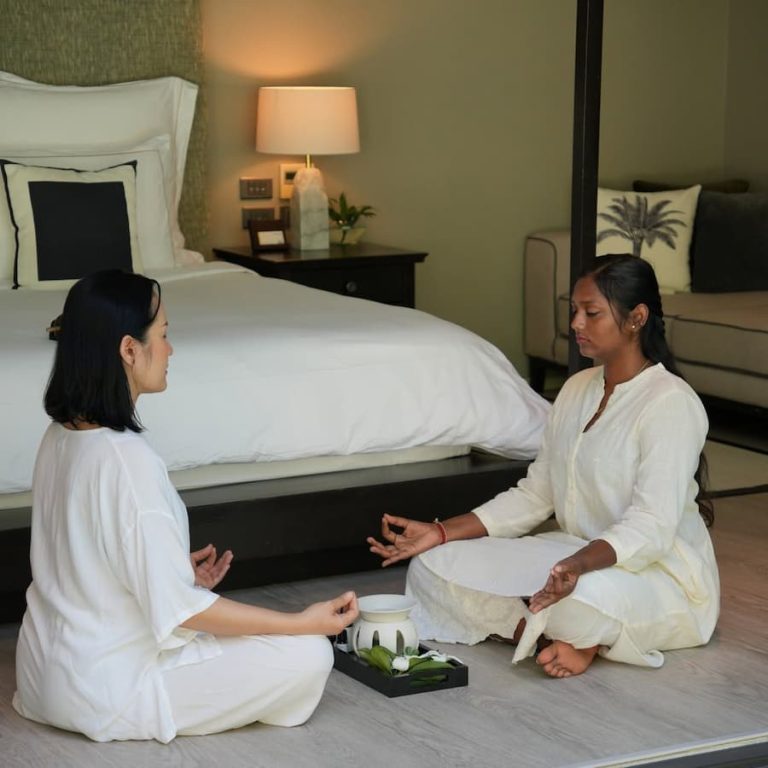
Mindfulness practices play a significant role in calming the nervous system and changing the body’s relationship with discomfort.
Breathwork, meditation, guided relaxation, and mindfulness sessions encourage parasympathetic activation, allowing the body to move away from chronic alertness and into a more restorative state.
These practices can help reduce muscular tension, improve emotional regulation, and create greater awareness of stress responses that may contribute to pain flare-ups.
Many guests also report improvements in concentration, sleep quality, and emotional resilience alongside reductions in pain intensity.
Gentle Movement and Graded Exposure
Movement remains an essential part of chronic pain recovery, but the approach matters greatly.
Rather than forcing the body into strenuous activity, Ayurah applies the principle of graded movement. This involves introducing gentle movement at a level the nervous system can comfortably tolerate before gradually building confidence and capacity over time.
Daily practices may include:
- Gentle yoga
- Tai Chi
- Restorative mobility sessions
- Guided walking
- Adapted fitness sessions
- Modified Muay Thai inspired movement for suitable guests
These sessions are personalised and carefully calibrated to support circulation, flexibility, and nervous system regulation without triggering unnecessary flare-ups.
Sleep Restoration and Stress Reduction
Sleep disruption is closely linked with chronic pain sensitivity. Poor sleep can heighten inflammation, increase emotional reactivity, and amplify pain perception.
The Pain Management Retreat supports sleep through a combination of calming evening rituals, restorative treatments, reduced stimulation, and a structured daily rhythm.
Stress reduction naturally follows this supportive environment. Many guests notice that by the middle of the retreat, their bodies begin feeling noticeably calmer, lighter, and less reactive.
This shift often creates a positive cycle in which improved rest supports better pain regulation, which in turn further improves sleep quality.
Holistic Therapies Supporting Recovery
The retreat also incorporates therapies that complement modern pain neuroscience principles and support whole-body wellbeing.
Guests may experience:
- Regenerative spa treatments
- Detox supporting therapies
- Floatation therapy on extended stays
- Therapeutic massage
- Breathwork and relaxation practices
- FX Mayr inspired wellness cuisine focused on reducing inflammatory load
Floatation therapy, included within the seven-night programme, can be particularly beneficial for nervous system recovery. The sensory quiet and weightless environment encourages profound parasympathetic relaxation, helping reduce physical tension and mental overstimulation.
A Complementary Approach to Medical Care
Ayurah’s approach does not replace medical treatment or clinical guidance. Instead, it complements conventional care by addressing aspects of chronic pain that are often overlooked within standard medical settings.
For many guests, combining medical support with nervous system regulation, restorative movement, stress reduction, and mindful recovery creates a more complete and sustainable path toward wellbeing.
Recovery Through Calm and Consistency
The Pain Management Retreat at AYURAH Phuket reflects a growing understanding that chronic pain requires patience, reassurance, and nervous system support rather than force.
By applying modern pain neuroscience within a holistic wellness environment, the retreat offers guests an opportunity to reconnect with movement, rest more deeply, and gradually restore confidence in their bodies.
Recovery rarely happens through intensity alone. More often, it begins with safety, consistency, and the space to heal without pressure.
Related Articles
- Thailand Wellness Retreats in 2026
- Incorporating Movement into Wellness Retreats for Chronic Pain Management
- A Journey to Pain Relief with CBD Therapy Focused Wellness Retreat
- Flotation Therapy to Reset The Nervous System and Sleep Better
- Wellness Retreat Support for Living with Chronic Pain
Prefer an AI Summary?
Aleenta Phuket
Phang Nga Resort & Spa
Phang Nga Resort & Spa
33 Moo 5, Khok Kloi,
Takua Thung, Phang Nga
82140 Thailand
T: +66 (0) 76 580 333