Phuket Old Town offers a very different side to Thailand’s largest island. Instead of beaches and waves, you will find pastel townhouses, Chinese shrines, character-filled cafes and small museums that tell stories of merchants, miners and migrant families.
Whether you are staying at our luxury resort hotel in Phang Nga, or in one of the beach areas around Phuket, or visiting from a nearby province for the day, the historic centre is compact enough to enjoy in a single outing and interesting enough to reward repeat visits.
Your Phuket Old Town Visit
Phuket Old Town sits on the eastern side of the island, just inland from the main harbour. By car, it is usually around thirty minutes from Patong, a similar time from Kata and Karon, and roughly an hour or a little more from the northern beaches and Phang Nga.
It works well as a full-day outing. Many visitors arrive mid-morning, spend a few hours walking and visiting museums, stop for lunch in one of the shophouses, then continue with temples, shops and a cafe stop in the afternoon. If you visit on a Sunday, you may want to stay into the evening for the Walking Street market.
Taxis, ride-hailing services, and hotel cars all serve the Old Town, and it is straightforward to be dropped off at Thalang Road, the natural starting point. Once you arrive, most sights lie within an easy walking radius.
Light clothing is best, along with comfortable shoes and a hat. Shoulders and knees should be covered for shrine visits, and it helps to carry a light scarf if you prefer sleeveless tops. A small pack with water, sunscreen and a camera will cover most needs.
Sense Of Place and History
The Old Town grew during the tin mining period of the nineteenth and early twentieth centuries, when traders and workers from southern China and Europe arrived to work in the industry. The wealth from tin allowed merchants to build solid shophouses and grand family homes, often in a style now known as Sino Portuguese.
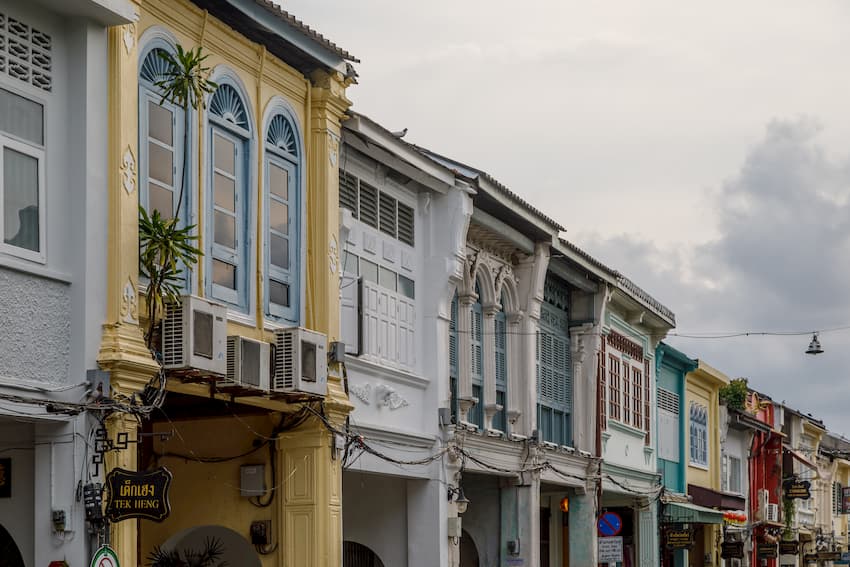
This style combines European arches, stucco and colonnades with Chinese plan layouts, courtyards and decorative details. Shophouses typically host a business at street level with family rooms above. Over time, these buildings gained pastel paintwork, tiles and ornate plasterwork, giving the streets their distinctive look today.
Alongside this, a rich Baba or Peranakan culture grew, shaped by marriages between Chinese settlers and local communities. This heritage still influences the food, clothing, festivals and design of the area, and several museums in the Old Town focus on it.
In recent years, local artists have painted murals on side walls and in alleys, many depicting everyday life, historical scenes, or regional dishes. The result is a quarter where past and present sit comfortably together.
Streets And Shophouses
- Thalang Road
Thalang Road is the natural spine of Phuket Old Town. Lined with rows of Sino Portuguese shophouses in soft blues, pinks and yellows, it offers a first clear view of the architectural style that defines the area.
Ground floors hold everything from noodle shops and cafes to fabric stores, galleries and small guest houses. Above, wooden shutters, arched windows and carved vent panels add rhythm and detail. It is worth pausing to look up now and then, as the most interesting features often sit above eye level.
On Sunday evenings, the road turns into a pedestrian market, yet even on a regular day, there is plenty to see. Small side lanes lead off towards other streets, and you can comfortably spend an hour or two moving slowly from one end to the other.
- Soi Rommanee
Soi Rommanee runs between Thalang Road and Dibuk Road and has become one of the most photographed corners of Phuket Old Town. The lane is narrow, with townhouses in pastel tones, intricate balconies and decorative doors.
The story behind it is less delicate. In the mining days, this was a red light area with brothels and opium dens. The former reputation still lends an edge to the pretty facades, making the street feel layered and interesting rather than simply postcard-perfect.
Today, guest houses, cafes and small businesses share the lane. It is a natural place to pause for photographs, though a bit of patience helps, as many other visitors have the same idea.
- Dibuk Road and Krabi Road
Running roughly parallel to Thalang Road, Dibuk Road and Krabi Road offer a slightly quieter look at Old Town life. The shophouses are no less attractive, yet there are fewer visitors and more local businesses, including cafes and boutiques.
Here you can slip into a coffee shop, browse small design stores or watch residents heading to school, work or the market. Decorative tiles, old-style shop signs and neat entrances give these streets a gentle charm.
Mansions and Period Homes
Beyond the rows of terraced properties, several standalone mansions help show the wealth generated by tin.
Phra Phitak Chyn Pracha Mansion sits on a well-kept property, surrounded by a wall and gate. Locals sometimes refer to it as an “angmor lao,” or foreign-style house, and it feels different from the denser streets nearby. The interior is not open to the public, yet it is worth passing by to admire its symmetry and sense of scale.
Baan Chinpracha offers access to the interior of a Sino-Colonial home. Built in the early twentieth century, it has retained patterned tiles, high ceilings, carved wooden furniture and family photographs. The central courtyard brings light and air into the heart of the house. A visit gives a clear idea of how an affluent family might have lived.
Limpanon House, a large abandoned mansion on Yaowarat Road, has a more atmospheric feel. Its shuttered windows and weathered walls have sparked many stories and drawn plenty of photographers. It is not an official attraction, and access can vary, so anyone who chooses to enter does so at their own judgment. Even from outside, however, it offers a striking contrast to the freshly painted buildings elsewhere.
Museums and Historic Hotels
Several museums and older hotels help fill in the details of Phuket’s past.
- Phuket Thai Hua Museum
Phuket Thai Hua Museum, housed in a restored school building, tells the story of Chinese migration and the growth of the local Chinese community. Displays cover trade routes, family life, education and the development of businesses across the island, with clear signage and a mixture of artefacts and photographs.
It is a comfortable place to spend an hour, especially late morning or early afternoon when the streets are warm.
- Peranakan Nitat Museum
Peranakan Nitat, also known as the Baba Museum, focuses on Baba Yaya heritage. Inside, you will find delicate jewellery, embroidered clothing, porcelain, furniture, and interior settings that show how wealthy families decorated their homes.
The colours and patterns are rich, and the museum helps explain the clothing and accessories you may notice in portraits or festival images elsewhere in Phuket.
- Memory At On On Hotel
The Memory at On On Hotel first opened in the 1920s and served travellers linked to the mining trade. Today it is a carefully renovated hotel with original features such as tiled floors, wooden staircases and framed photographs along its corridors.
Film fans may recognise it from the opening of the film The Beach. The property also displays small mining-related items and houses a textile shop where you can buy silk and other fabrics that feel more personal than mass-produced souvenirs.
- Thavorn Hotel Museum
The Thavorn Hotel has been welcoming guests for decades and has turned much of its lobby into a display of photographs, toys, typewriters, cameras and assorted memorabilia. Cabinets and walls are filled with objects that hint at previous eras.
Spending a little time here feels like stepping into a family attic, the kind that has been left untouched for many years. It pairs nicely with a drink in the lounge.
- Suriyadate Fountain
At the end of Rassada Road, the Suriyadate Fountain stands inside a traffic circle. On first glance, it appears to be a typical decorative fountain, yet the sculpted water jets are modelled on water cannons once used to blast soil away from tin deposits. It provides a neat visual link to the industry that shaped so much of the town.
Temples and Shrines
Temples and shrines remain active places of worship, adding an essential spiritual layer to any walk through the Old Town. Modest clothing, quiet voices and a respectful attitude are all appreciated.
- Jui Tui Shrine
Jui Tui is one of Phuket’s key Chinese shrines and is strongly linked to the annual vegetarian festival. The building is painted in rich reds and golds, with dragon motifs, lanterns and incense burners.
Many visitors are interested in the fortune stick ritual. A container holds many thin wooden sticks, each marked with a number. Kneel or bow in front of the altar, then shake the container until one stick falls out. The number on the stick corresponds to a slip of paper in a nearby cabinet, which contains a written fortune.
It is a simple act, yet it can feel surprisingly meaningful. Watching how local worshippers move, and following their lead, helps keep the practice respectful.
- Pud Jow Taoist Temple
Next to Jui Tui is Pud Jow, considered one of the oldest Chinese Taoist temples in Phuket. The temple is thought to be more than two hundred years old and was rebuilt about a century ago after a fire.
Inside, look for the main altar to the goddess Guan Yin, the painted wooden beams, the hanging lanterns, and the small side shrines. The space is compact, yet every corner holds carvings, offerings or calligraphy worth noticing.
- Shrine Of Serene Light
Reached through a narrow entrance just off the street, the Shrine of Serene Light feels slightly hidden, which adds to its charm. Once inside, you step into a courtyard framed by traditional buildings with terracotta tiled roofs and murals.
The shrine is known for its peaceful garden, detailed wall paintings and photographic appeal. It can work well as a quiet pause in the middle of a busy day.
Food, Coffee and Refreshments
Food is a highlight of any visit to Phuket Old Town. The mix of Chinese, Malay and southern Thai influences has produced dishes with plenty of flavour and character.
In the morning, traditional coffee shops serve strong local coffee, often with condensed milk, alongside simple snacks such as toast, eggs or dough sticks. Street stalls might offer roti with curry, noodles or rice porridge. Joining office workers and market traders for breakfast gives a very local start to the day.
As the sun climbs higher, air-conditioned cafes on and around Thalang Road become especially appealing. Many have a relaxed design, with vintage furniture, houseplants, and a mix of Thai and Western snacks. One small spot, White Chalk, is known for homemade drinks and soft drinks served in a playful teddy bear-filled setting.
For lunch, visitors can choose between simple rice-and-curry shops, noodle houses, and more formal restaurants. Dishes such as crab curry, Hokkien noodles, stir-fried greens, and braised pork are familiar favourites. Those who prefer meat-free options will find plenty of tofu, vegetable stir-fries, rice dishes, and soups.
Later in the day, markets and small stalls sell local sweets made from coconut, pandan and sticky rice, as well as ice cream and fruit shakes. These are easy to try in small portions as you continue your walk.
Shopping and Souvenirs
Phuket Old Town offers a good balance between everyday markets and more specialised shops.
Phuket City Market, near the centre, is busy and practical, with stalls laden with vegetables, fruits, herbs, spices, fish, and meat. Even without buying anything, it gives a clear picture of daily life and the ingredients that appear in local dishes.
For something more decorative, China Inn is a charming address. It combines a cafe with a space full of vintage furniture, Chinese fabrics and lacquer pieces. Even if you are not shopping for large items, it is enjoyable to look around and imagine how pieces once sat in family homes.
The Phuket Amulet Centre brings together many small stalls that sell Buddhist amulets and small statues. These carry strong cultural and spiritual meaning, and collectors may spend hours comparing details. Visitors are welcome, and it is perfectly acceptable to observe and ask questions politely before deciding whether to buy.
Nguan Choon Tong, an old Chinese herbal pharmacy, offers dried herbs, herbal teas and balms used for many generations. Wooden drawers and the aroma of roots and barks create an atmosphere very different from that of a modern pharmacy. Items from here make thoughtful gifts for anyone interested in traditional approaches to wellbeing.
Along Thalang Road and nearby streets, small boutiques and tailors sell clothing, accessories, handicrafts and home items. Some focus on breezy dresses and shirts, others on jewellery or small design items that fit easily into luggage. Tailors can often turn around made-to-measure pieces within a few days, so it helps to plan if something catches your eye.
The Phuket Philatelic Museum, housed in a former post office, rounds off the shopping area with a quieter note. Its displays of stamps, old post office equipment and telegraphs appeal to those with an interest in design and communication history.
Sunday Walking Street
If your visit falls on a Sunday, it is worth considering staying until the evening to enjoy the Walking Street market on Thalang Road.
From late afternoon, the street closes to traffic and stalls appear along both sides. Food is a major draw, with skewers, dim sum, noodles, fried snacks, fresh fruit, and sweets all available in small portions. Handcrafted jewellery, clothing, artwork, toys and souvenirs sit alongside more traditional goods.
The atmosphere is lively but friendly, with families, couples and groups of friends drifting between stalls. There is often live music or small performances, and the shophouse facades look especially pretty under string lights. It is a memorable way to see the Old Town change character from daytime to evening.
Day Trip Idea
A day in Phuket Old Town does not need to follow a strict schedule, yet it can be helpful to picture an easy route.
Arrive in town around ten in the morning and start with a gentle wander along Thalang Road, turning into Soi Rommanee and looping back along Dibuk Road or Krabi Road. Late morning could be spent at the Phuket Thai Hua Museum or the Peranakan Nitat Museum, followed by lunch at a nearby shophouse restaurant.
Early afternoon might take you through Suriyadate Fountain and the Memory at On On Hotel, then on to the Thavorn Hotel lobby for a look at its collection. Later, you could visit Jui Tui and Pud Jow, finish at Shrine of Serene Light, then browse Nguan Choon Tong and a few shops before a final coffee.
If it is Sunday, you could stay on as stalls are set up for the Walking Street market. If not, a late-afternoon return to your hotel still gives time for a swim, a shower, and a relaxed dinner to round off the day.
Old Town Streets And Coastal Retreats
A day in Phuket Old Town adds colour and character to any holiday in the region. The pastel shophouses of Thalang Road, the incense-filled shrines, the old hotel lobbies and small museums all reveal stories that lie behind the island’s modern reputation for beaches and nightlife.
Staying on the mainland coast in nearby Phang Nga makes this contrast even more enjoyable. From Aleenta Phuket Phang Nga Resort and Spa on Natai Beach, it is easy to spend one day walking historic streets and the next resting beside your private pool or enjoying a treatment at Ayurah Wellness. Beach mornings and cultural outings sit side by side comfortably, giving you a fuller sense of southern Thailand in a single trip.
Related Articles
- Shopping Phuket’s Local Markets
- The Best of Phuket
- Phuket Holiday Tips
- Our Favourite Beaches in Phuket
- Eight Islands to Explore from Phuket
Prefer an AI Summary?
Aleenta Phuket
Phang Nga Resort & Spa
Phang Nga Resort & Spa
33 Moo 5, Khok Kloi,
Takua Thung, Phang Nga
82140 Thailand
T: +66 (0) 76 580 333